Claims Guidance
The Technology Behind Modern Claim Documentation
Claims used to be argued on opinion. Thermal cameras, moisture meters and aerial imagery replaced most of that with data, which is harder to disagree with.
Twenty years ago a property claim was settled on two written opinions and a stack of photographs. Where they disagreed, the argument was essentially about whose judgement to prefer.
Most of that has been replaced by measurement. Here is what the tools actually do. And, more usefully, what each one cannot prove.
Aerial imagery and drones
What it does: captures every roof slope, including those unsafe or impractical to walk. Produces measured area and pitch data, and photographs damage in place with location metadata.
Why it matters: the most common defect in a hail or wind inspection is that not every slope was examined. Aerial capture removes that as a variable, and time-stamped imagery establishes condition on a specific date.
What it cannot do: confirm a fractured mat. Hail bruising is verified by touch. A soft impact point indicates the mat beneath has fractured. Imagery identifies where to look. It does not replace hands on the roof.
Thermal imaging
What it does: detects temperature differentials across surfaces. Wet material holds and releases heat differently from dry material, so moisture inside a wall or ceiling frequently shows as a thermal anomaly before anything is visible.
Why it matters: it finds water where the surface still looks fine, which is exactly the damage carrier estimates omit. It is also non-destructive, no exploratory holes required.
What it cannot do: measure moisture. A thermal camera shows a temperature difference, and temperature differences have other causes. Missing insulation, plumbing runs, air leakage. Every thermal anomaly must be confirmed with a meter. An adjuster presenting thermal images alone is presenting an indication, not a finding.
Moisture meters and mapping
What it does: measures actual moisture content in materials. Pin meters read directly. Non-invasive meters read a shallow depth without damage. Readings are taken across affected and unaffected areas to establish a dry standard to compare against.
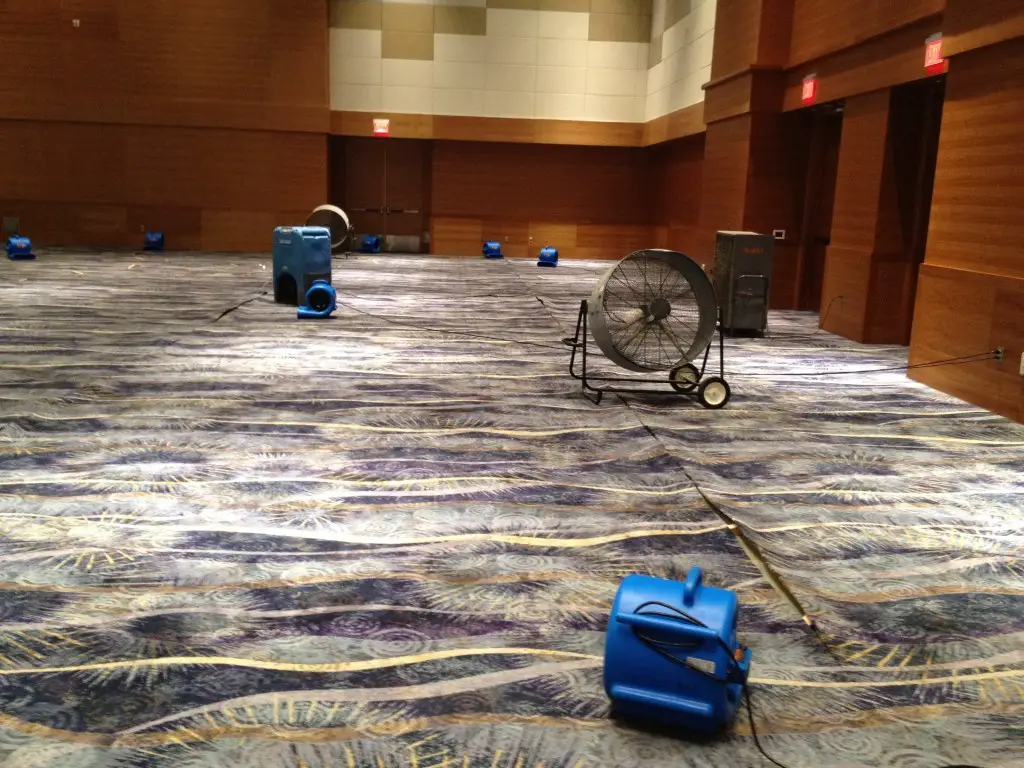
Why it matters: this is the evidence. It shows how far water actually migrated, which drives the scope of demolition and replacement. Daily readings through the drying period also justify the duration of equipment charges.
What it cannot do: tell you how long the water was there. Duration, the sudden-versus-gradual question. Is inferred from corrosion patterns, microbial growth and material deterioration, not from a moisture reading.
3D capture and photo documentation
What it does: produces a navigable digital record of the property before demolition. Anyone can revisit any room months later.
Why it matters: claims are negotiated long after mitigation has destroyed the evidence. A complete spatial record means disputes about what was there stop being memory contests. It is particularly valuable for contents, because it captures the room as it stood.
What it cannot do: substitute for close-up detail on specific damage, or for readings behind surfaces.
Estimating software
What it does: builds line-item estimates using regional pricing databases, in the same platforms carriers use.
Why it matters: it makes the two documents directly comparable. A dispute becomes "this estimate has forty-one line items and yours has twenty-eight. Here are the thirteen that are missing and the photographs supporting each." That is a specific conversation with a specific answer, rather than an argument about whether an offer is fair.
What it cannot do: know what is actually damaged. Software prices a scope. It does not create one. A thorough inspection producing a poor estimate is recoverable. A poor inspection with a beautiful estimate is not.
Specialist reporting
Some questions need a discipline of their own:
- Structural engineers for causation, structural integrity and the seismic-versus-settlement question
- Industrial hygienists for mold assessment and clearance testing
- Leak detection specialists for concealed and slab leaks
- Electrical and mechanical assessment for submerged or heat-exposed systems
An independent expert report carries weight in negotiation and in appraisal that an adjuster's opinion alone does not.
What has not changed
Tools produce data. Data does not organise itself into an argument.
The claim still turns on reading the policy correctly, knowing which coverages respond, understanding how the carrier's estimating platform tends to under-scope particular assemblies, and presenting the evidence in a form that has to be answered specifically.
We use the tools above on property damage claims throughout the Houston region and Texas. As evidence for a position, not as a substitute for building one.
Frequently asked questions
Can a drone inspection replace a physical roof inspection?
Not entirely. Aerial imagery documents every slope, including those unsafe to walk, and provides measured area and pitch data. But hail bruising is confirmed by touch. Pressing an impact point to determine whether the mat beneath has fractured. Imagery shows where to look. It does not replace hands on the roof.
Does thermal imaging prove water damage?
It indicates it rather than proving it. A thermal camera detects temperature differences, and moisture is one cause among several. Missing insulation, plumbing runs and air leakage produce similar anomalies. Every thermal indication must be confirmed with a moisture meter reading before it becomes evidence.
What is a dry standard in water damage restoration?
A baseline moisture content measured in unaffected materials of the same type in the same building, used as the target for drying. Materials are considered dry when they return to that reading. Daily logs against the dry standard both confirm the drying is complete and justify the duration of equipment charges to the insurer.