Storm & Hail
Hail Damage: How to Spot It and How to Claim It
Hail damage is invisible from the ground and denied more often than any other peril. Both facts have the same fix: knowing what the evidence looks like.
Texas leads the country in hail losses most years, and Harris, Brazoria and Galveston counties take their share every spring. Yet hail is the peril most likely to be denied, and it is denied with the same two words nearly every time: wear and tear.
That determination is usually made from the ground or from a single slope, in twenty minutes, by someone with a full schedule. It is an opinion. Opinions are rebuttable with evidence. But only if you know what the evidence is.
What hail damage actually looks like
On an asphalt shingle roof, genuine hail damage has a specific signature:
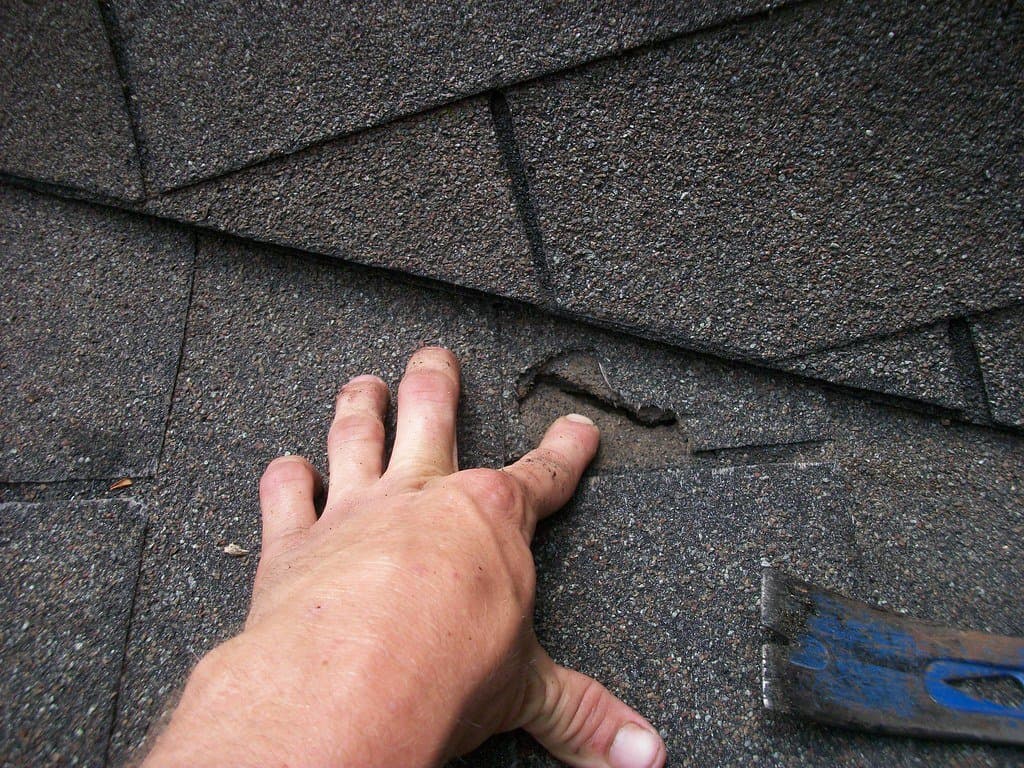
- A round bruise, not a scrape. Impact points are circular, randomly distributed, and roughly the size of the stone that made them.
- Granule loss exposing black mat. The protective granules are knocked away, leaving a dark spot.
- The bruise feels soft. Press it with your thumb. Hail impact fractures the fibreglass mat beneath, and a fractured mat gives slightly, like pressing a bruise on fruit. This is the difference between functional damage and cosmetic marking.
- Directional consistency. Hail falls at an angle, driven by wind. Damage concentrates on the slopes facing the storm, and that pattern should be consistent across the property.
What is not hail damage: blistering, which is round but shows no fractured mat and no directional pattern. Mechanical scuffing from foot traffic, which is linear. Granule loss along drip edges, which is normal weathering.
The evidence that settles the argument
The roof itself is contested territory. Soft metals are not.
Check the gutters, downspouts, roof vents, flashing, fascia and the fins on your air conditioning condenser. Hail dents soft metal, and those dents cannot be attributed to age, foot traffic or manufacturing defect. If your condenser fins are pockmarked and your gutters are dimpled, hail struck the property. And the roof was under the same sky.
This is the corroboration that turns a subjective roof call into a documented event.
Add to it:
- Test squares. A marked ten-by-ten foot area on every slope with the impact count recorded. Judging a roof by measurement rather than impression.
- A dated hail report for the property coordinates, tying the damage to a specific covered event and rebutting any suggestion it predates the policy.
- Window screens, siding and soft trim on the strike elevations, which took the same impacts and are routinely omitted from the scope.
Cosmetic damage exclusions
A growing number of Texas policies carry a cosmetic damage endorsement, excluding hail damage that affects appearance but not function. Carriers apply it broadly.
Read it carefully. These exclusions are generally written for metal roofing and siding, where a dent genuinely does not shorten service life. They are much harder to apply to asphalt shingles where impact has fractured the mat, because a fractured mat accelerates granule loss and compromises the water seal. That is functional damage by definition.
If a cosmetic exclusion has been applied to an asphalt roof with soft, fractured bruising, that is worth challenging.
Matching, and why partial repairs are a problem
Shingle lines change constantly. A discontinued product cannot be matched, and a patched slope in a visibly different color is not a repair to the pre-loss condition.
Texas policies vary in how they treat matching, and carriers rarely volunteer full-slope or full-roof replacement. But where a reasonable match is genuinely unavailable, the argument for replacing the continuous area is a legitimate one and should be made in writing.
Do not let it sit
The most damaging thing a homeowner can do with a hail claim is wait.
Hail damage does not leak immediately. A compromised roof can hold for two seasons before the first ceiling stain appears. By which point you have three problems instead of one: the original hail damage, a late-notice defense from the carrier, and water damage that may now be excluded as a maintenance failure.
If a hailstorm crossed your address, have the roof inspected while the event is recent and documented, even if nothing is leaking and nothing is visible from the ground.
Choose your inspector carefully
After a hailstorm, out-of-state roofing crews arrive in force. Some are excellent. Some will be unreachable by spring.
Important legal point: in Texas it is unlawful for a roofing contractor to act as a public insurance adjuster on a claim they are also bidding to repair. A roofer who offers to "handle your claim" or "negotiate with your insurance" is operating outside the law, and it puts your claim at risk. A roofer prices and performs the repair. A licensed public adjuster documents the loss and negotiates the settlement. Those are separate roles for a reason.
If your hail claim was denied
Wear-and-tear denials are among the most frequently reversed decisions we work on, because they rest on a single inspection rather than on measurement. Test squares on every slope, an impact count, soft-metal corroboration and a dated storm report for your coordinates give the carrier something specific to answer.
We handle hail damage claims throughout Houston, Pearland, Alvin, Friendswood, League City and across Texas. Reviews are free and there is no fee unless the claim recovers more.
Frequently asked questions
How do I know if my roof has hail damage without climbing on it?
Check the soft metals from the ground: gutters, downspouts, fascia, roof vents and especially the fins on your air conditioning condenser. Hail dents those, and the dents cannot be blamed on age or foot traffic. If they are pockmarked, the roof was struck by the same storm and warrants a proper inspection.
Why was my hail claim denied as wear and tear?
Usually because the inspection was limited. One slope, a visual walk, no test squares and no impact count. That is an opinion rather than a measurement, and it is rebuttable with slope-by-slope test squares, soft-metal corroboration and a dated hail report for your coordinates.
What is a cosmetic damage exclusion on a Texas policy?
An endorsement that excludes hail damage affecting appearance but not function. It is written primarily for metal roofing and siding, where dents do not shorten service life. Applying it to asphalt shingles where impact has fractured the mat is much harder to justify, because a fractured mat accelerates granule loss and compromises the water seal.
Can my roofing contractor handle my insurance claim for me?
No. In Texas it is unlawful for a roofing contractor to act as a public insurance adjuster on a claim for a property they are also contracting to repair. A roofer prices and performs the work. A licensed public adjuster documents the loss and negotiates with the carrier. Using a roofer for both roles puts the claim at risk.