
Water Damage in Houston, TX
Water claims often turn on one question: was the loss sudden and accidental, or gradual? We record moisture readings, the failed component and the affected materials early, because mitigation removes that evidence within days.
A water loss in Houston, TX, starts inside the walls of the house, not outside. A burst supply line, a failed appliance hose or a roof leak during a storm can soak materials fast in this humid city. Many homeowners policies cover water that escapes suddenly and accidentally, and they commonly exclude repeated seepage over weeks or months, so the first records carry real weight.
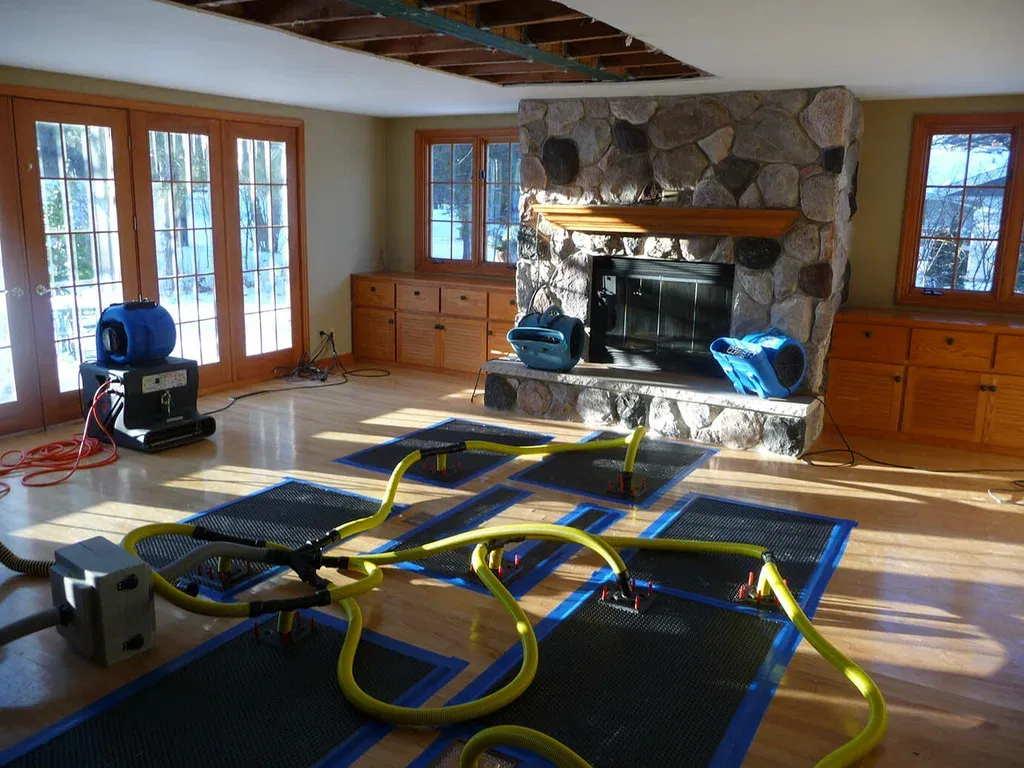
Older pier-and-beam bungalows add a twist. A leak can run into the crawl space and sit under the floor, so the visible damage upstairs understates the loss until someone checks from below. Brick-veneer houses can trap moisture in wall cavities behind the brick. We take moisture readings, use thermal imaging, photograph the failed part and note corrosion, because those details speak to how long the water ran. We also check drying logs and mitigation invoices before a carrier cuts them as excessive. After a major Houston storm, it can be unclear whether water came from inside or from outside, and that decides which policy applies. Call us for a free claim review before you sign off on a drying bill or a settlement offer.
What a carrier's inspection tends to miss on water damage claims in Houston
- 01
Wet material behind the surface
Wall cavities, subfloor and cabinet bases can hold water long before any stain shows.
- 02
The failed part was thrown away
The fitting or pipe shows how the loss happened, and it is hard to rebuild that story once it is gone.
- 03
A gradual leak finding made on day sixty
Corrosion, moisture gradients and the state of the materials speak to duration, and they are easiest to capture early.
- 04
Mitigation invoices cut as excessive
Drying charges can be checked against industry drying standards before they are reduced.
- 05
Slab leak access costs
Some policies pay for tearing out and restoring the slab and flooring to reach a leak, even where the pipe itself is excluded.
- 06
Flooring that cannot be matched
Where a run of flooring cannot be repaired invisibly, the scope question is the continuous area.
What gets documented on water damage claims in Houston
- Moisture meter readings across affected assemblies
- Thermal imaging of walls, ceilings and floors
- The failed pipe, fitting or appliance, photographed and kept where possible
- Corrosion and duration indicators
- Wall cavity, subfloor and cabinet substrate condition
- Drying equipment logs and mitigation invoices
- Flooring layout and continuity
- Mold limits and secondary growth from the covered event
Local exposure in Houston
Bayou and street flooding
Houston's bayous carry heavy rain across a flat metro area, and Hurricane Harvey in 2017 flooded many homes that had not flooded before.
Which policy pays for water damage
Questions about water damage claims in Houston
Answer 01
Many Texas homeowners policies cover water that escapes suddenly and accidentally from plumbing or appliances, including resulting damage. The cost to repair the failed pipe itself is often excluded, as is damage from long-term seepage. Your policy wording controls.
Many Texas homeowners policies cover water that escapes suddenly and accidentally from plumbing or appliances, including resulting damage. The cost to repair the failed pipe itself is often excluded, as is damage from long-term seepage. Your policy wording controls.
Water damage starts inside the property, such as a burst supply line, an overflowing appliance or a roof leak during a storm. Flood is rising surface water from outside, including storm surge and bayou overflow, and it generally requires a separate NFIP or private flood policy.
It can be where the physical evidence points to a sudden failure. Moisture gradients, the condition of the failed part, corrosion and the extent of any growth all say something about duration. The sooner that evidence is captured, the better it holds up.
Many Texas homeowners policies cover water that escapes suddenly and accidentally, including the resulting damage. The repair of the pipe itself is often excluded, and so is long-term seepage. Your policy wording controls, and we read it with you before you decide anything.
It can be part of the claim when the water came from a covered cause. The damage may stay hidden until the crawl space is inspected, so we check from below and record moisture in joists, subfloor and insulation. Add that record to the claim before repairs cover it up.